Collectible Coins, Challenge Coins, and Sobriety Coins: Pocket-Sized Stories of Value, Honor, and Hope
Coins are usually thought of as money: something to spend, save, or lose between couch cushions. But certain coins are never meant to be spent. They are kept, traded, displayed, carried, and passed down. Collectible coins, challenge coins, and sobriety coins may look like simple circles of metal, yet each carries a different kind of weight. One speaks of history and rarity. Another speaks of belonging and respect. The third speaks of personal victory, one day at a time.
Collectible Coins: The Quiet Thrill of the Hunt
Collectible coins, often called numismatic coins, appeal to people who love history, craftsmanship, and the joy of discovery. A coin that once passed through ordinary hands can become extraordinary because of its date, mint mark, condition, or minting error. Collectors learn to read tiny details: the sharpness of a feather, the position of a date, the presence of a doubled die, the subtle color of old silver.
What Makes a Coin Collectible?
- Rarity: Low mintage, lost hoards, and short-lived designs can turn a coin into a prize.
- Condition: Grade matters. An uncirculated coin with original luster may be worth far more than a worn example.
- History: Coins from ancient Rome, colonial America, or wartime issues connect us to people and events.
- Errors and varieties: Mistakes at the mint often become treasures, from off-center strikes to repunched mint marks.
- Personal taste: Some collectors chase key dates; others fall in love with animal designs, ships, or portraits.
The collector’s mindset is part patience, part research, and part restraint. Beginners often learn the hard way that cleaning a coin can destroy its value. Experienced collectors handle coins by the edges, store them in archival holders, and buy from reputable dealers. They know that a coin’s story is often written in its wear.
“A collection is not just a set of coins. It is a record of curiosity, one discovery at a time.”
Challenge Coins: A Handshake You Can Carry
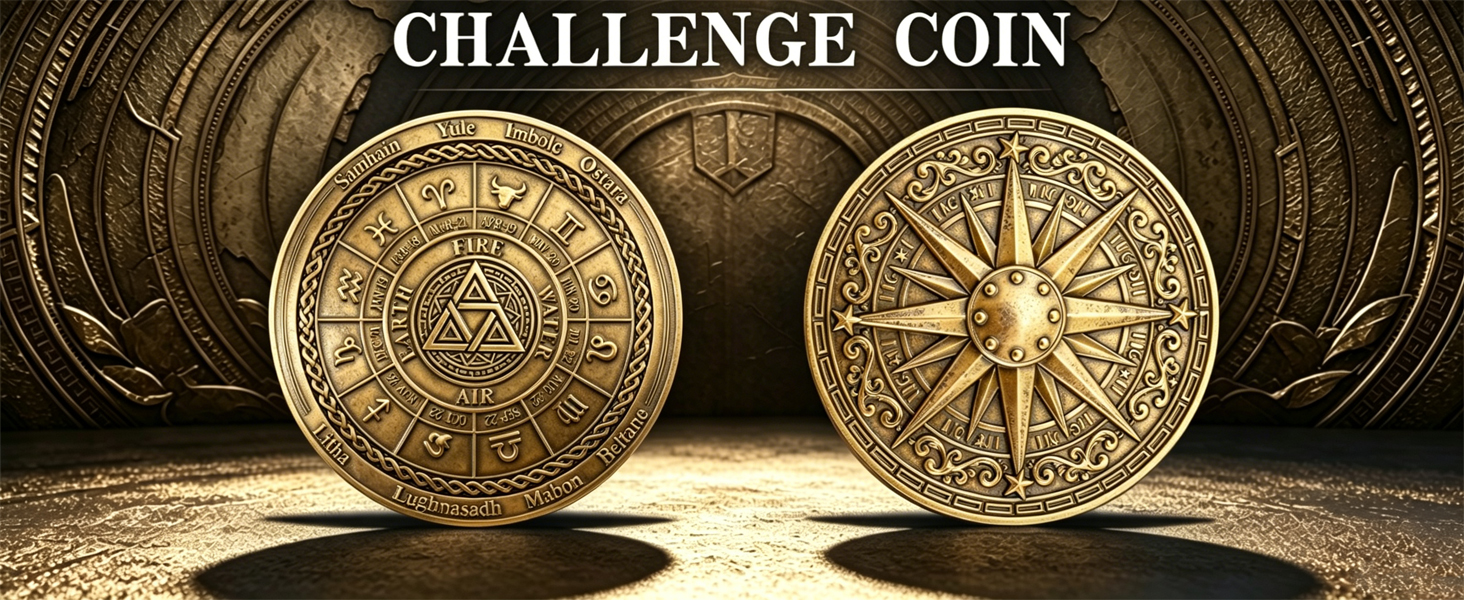
Challenge coins carry a different kind of value. They are not usually valued for metal content or age. Instead, they represent identity, membership, and recognition. The tradition is often linked to military units, where a coin might be given for excellence, camaraderie, or a job well done. Today, challenge coins appear in police and fire departments, businesses, sports teams, universities, conferences, and nonprofit groups.
Design tells the story. A challenge coin may feature a unit crest, a motto, an emblem, a map, or a date that only insiders understand. Its meaning deepens when it is presented in person. A coin given by a commander, mentor, or teammate can become a lifelong keepsake.
- Military coins: Unit pride, deployment memories, and awards for service.
- First responder coins: Honor for bravery, service, and fallen colleagues.
- Corporate coins: Recognition for milestones, leadership, and team success.
- Event coins: Souvenirs from conferences, competitions, and reunions.
Challenge coins are also social objects. In some traditions, carrying your coin matters. If challenged and you cannot produce it, you may owe a round of drinks. The rule is playful, but the lesson is serious: the coin is a reminder that you belong.
Sobriety Coins: Milestones You Can Hold
Sobriety coins, sometimes called sobriety medallions or AA coins, mark time in recovery. They are often given at meetings to celebrate 24 hours, 30 days, 60 days, 90 days, six months, one year, and beyond. For many people, a sobriety coin is more than a token. It is a physical anchor when words feel fragile.
Symbols That Speak Softly
- Roman numerals: Years of continuous sobriety, such as I, V, or X.
- The Serenity Prayer: A familiar reminder to accept, change, and seek wisdom.
- The triangle: Recovery, unity, and service in some traditions.
- “To Thine Own Self Be True”: A phrase often engraved on AA medallions.
- Colors and finishes: Bronze, silver, gold, and specialty designs may mark different lengths of time.
A sobriety coin fits in a pocket, a wallet, or a palm. It can be rubbed during a hard moment or placed on a nightstand as a daily promise. The coin does not do the work of recovery, but it holds evidence of work already done. That is why sobriety coins are often treasured far beyond their material cost.
“One day at a time” becomes easier to believe when you can hold a reminder in your hand.
Where the Three Worlds Meet
These three coin types overlap more than people expect. A collector might seek a military challenge coin for its historical design. A recovery group might create a custom sobriety coin with a logo and motto. A family might frame a grandfather’s coin collection beside the challenge coin he carried overseas. In each case, the coin becomes a vessel for memory.
Display can be simple: albums for collectible coins, shadow boxes for challenge coins, and small keepsake cases for sobriety medallions. Some people carry one special coin every day. Others rotate them with seasons or milestones. The best approach is the one that keeps the story alive.
Buying, Storing, and Respecting the Metal
- Buy from trusted sources. Authentication matters, especially for rare collectible coins.
- Do not clean old coins. Patina and wear are part of their history and value.
- Use safe holders. Avoid PVC plastic, which can damage coin surfaces over time.
- Handle with care. Hold collectible coins by the edge and keep them away from moisture.
- Record the story. Write down who gave you a challenge coin or what a sobriety coin celebrates.
Final Thought: A Coin Is a Compass
Collectible coins teach us to look closely at the past. Challenge coins remind us that honor is often shared. Sobriety coins prove that hope can be measured in days, months, and years. Different as they are, they share one powerful quality: they turn abstract ideas—history, belonging, courage—into something you can hold. In a world of digital everything, that is a rare and beautiful thing.
About the Author