Unleash Your Creativity with Paper Mache Eggs: The Ultimate Paintable Easter Craft
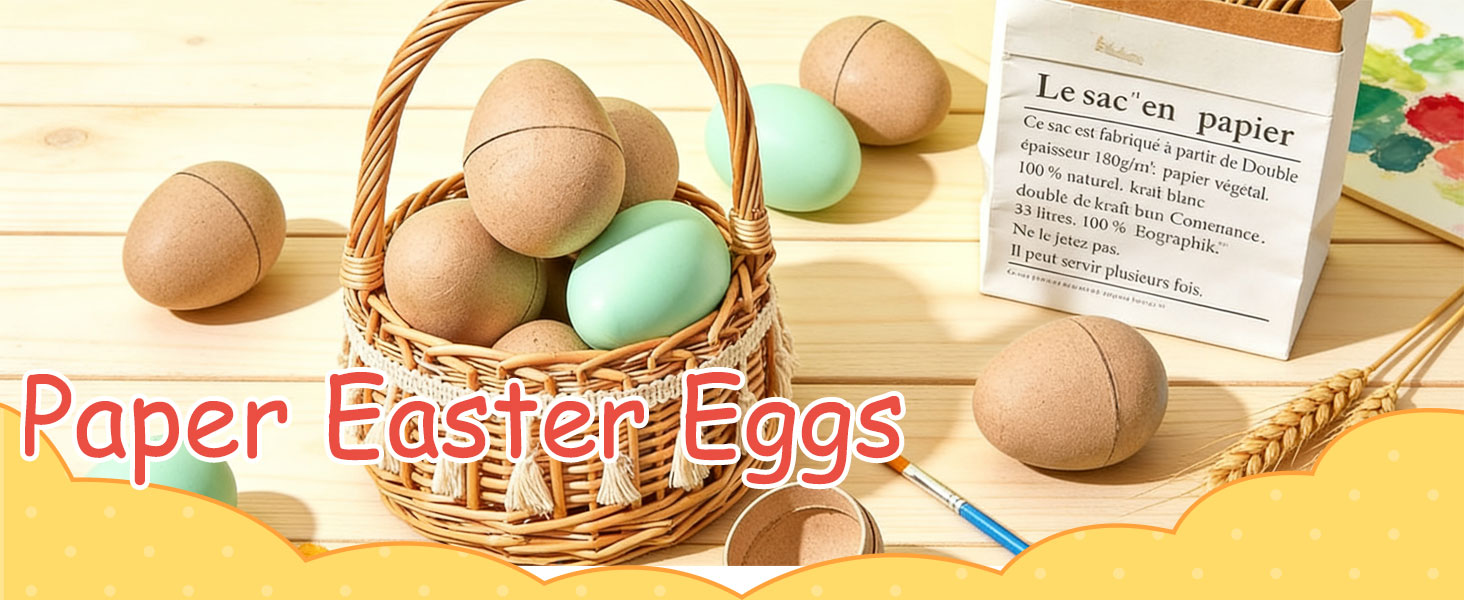
When Easter crafting season arrives, few materials offer as much possibility as paper mache eggs. Lightweight, sturdy, and wonderfully smooth, these blank beauties are the perfect starting point for Easter eggs for crafts. Whether you are planning a family afternoon, a classroom activity, or a solo creative session, paintable Easter eggs give you the freedom to experiment without worrying about cracked shells or messy real eggs.
Why Paper Mache Eggs Are a Crafting Favorite
Paper mache eggs strike a rare balance between durability and delicacy. They are firm enough to hold layers of paint, glue, and embellishments, yet light enough to hang from a garland or nestle into a centerpiece. Unlike real eggs, they will not rot, crack at the slightest touch, or ruin your table if they roll off the edge. And unlike plastic eggs, they have a natural, slightly porous surface that grips paint beautifully.
That surface is exactly what makes paintable Easter eggs so appealing. Acrylics, tempera, gouache, and even markers glide on smoothly. You can prime them, distress them, stencil them, or leave parts unpainted for a rustic look. The material takes texture well, so sponging, splattering, and dry-brushing all work in your favor.
A Blank Canvas for Every Age
Children love paper mache eggs because they are easy to handle and hard to break. Adults love them because they can be as simple or as sophisticated as the painter chooses. A toddler can slather on two colors and call it art; a detailed crafter can spend hours building mandala patterns and metallic accents. That range makes these eggs a staple in homes, schools, and community craft groups.
“A paintable egg is not just a craft supply—it is an invitation to slow down, play with color, and make something that feels entirely your own.”
Choosing the Right Paintable Easter Eggs
Not all paper mache eggs are created equal. Before you buy or make a set, look for a few key qualities that make painting easier and results more polished.
- Surface quality: Look for a smooth finish with minimal ridges or seams. A light sanding can help, but starting with a well-made egg saves time.
- Size variety: Mixing small, medium, and large eggs adds visual interest to baskets, garlands, and table displays.
- Sturdy construction: The egg should feel firm without being heavy. If it has a hanging hole, check that the edges are clean.
- Material safety: For children, choose non-toxic paints and sealants, and avoid eggs with loose fibers or dusty surfaces.
Paper Mache vs. Plastic vs. Real Eggs
Real eggs are traditional, but they are fragile and require blowing out or hard-boiling before decorating. Plastic eggs are durable, yet their slick surface can make paint bead up and peel. Paper mache eggs sit comfortably in the middle: they accept paint readily, hold up to handling, and feel more natural in the hand. For Easter eggs for crafts, that combination is hard to beat.
Painting Techniques That Make Your Easter Eggs Pop
The best part about paintable Easter eggs is that they reward both simple and complex techniques. Here are a few approaches to try.
- Start with a base coat: A layer of white or cream acrylic helps colors read true and covers any darker spots in the paper mache.
- Layer your colors: Paint in thin coats rather than one thick layer. This prevents drips and gives a smoother finish.
- Add texture: Use a sponge, toothbrush, or natural sea sponge to dab on contrasting colors. Splatter paint with a stiff brush for a playful, confetti-like effect.
- Try resist techniques: Place stickers, tape, or rubber bands on the egg, paint over them, then peel them away for crisp patterns.
- Seal the finished egg: A coat of matte or gloss varnish protects your work and makes the colors look richer.
Beginner-Friendly Designs
If you are new to painting eggs, start with simple designs that look impressive with minimal effort. Polka dots made with a cotton swab, wide stripes of pastel colors, and soft ombre gradients are all beginner-friendly. You can also paint half an egg one color and half another, then add a thin metallic line down the center.
Advanced Ideas for Crafty Souls
More experienced crafters can explore mandala patterns, floral brushstrokes, geometric color blocking, and metallic leaf accents. Decoupage with thin paper napkins or tissue paper can create a vintage look, while fine-liner pens add details that paintbrushes cannot. The key is to build in layers and let each stage dry completely.
Beyond Paint: Embellishing Paper Mache Eggs
Paint is only the beginning. Once your base layer is dry, you can add glitter, ribbon, washi tape, beads, buttons, or small dried flowers. Glue a loop of twine to the top for hanging, or nestle the eggs into a bed of shredded paper and moss. For a sophisticated centerpiece, keep the palette tight—three complementary colors and one metallic accent often look more elegant than a rainbow of choices.
Tips for a Stress-Free Craft Session
- Cover your workspace with newspaper or a washable tablecloth.
- Use an egg carton as a drying stand—it holds each egg upright and keeps wet paint off the table.
- Keep a damp cloth nearby for quick cleanups and to wipe paint off fingers.
- Work in thin layers and allow plenty of drying time between coats.
- Seal finished eggs with a clear acrylic spray or brush-on varnish for durability.
“Handmade Easter eggs carry a story. Every brushstroke, smudge, and sparkle is a small reminder that creativity does not need to be perfect to be beautiful.”
Fun Projects for Home and Classroom
Paper mache eggs are versatile beyond the Easter basket. String them into a spring garland, use them as place cards by writing names on small tags, or arrange them in a bowl with fresh greenery for a simple centerpiece. They also make thoughtful handmade gifts when tucked into a small box with a handwritten note.
Classroom-Friendly Ideas
In a classroom, set up stations for base coating, stamping, and embellishing. Encourage children to paint an egg that tells a story—a favorite animal, a dream vacation, or a pattern inspired by a book. Paper mache eggs are forgiving enough for little hands and sturdy enough to survive the trip home.
Final Thoughts
Whether you are searching for Easter eggs for crafts, planning a family activity, or simply looking for a satisfying creative outlet, paper mache eggs deliver. They are affordable, adaptable, and endlessly paintable. Gather your supplies, choose a color palette, and let your imagination do the rest. With a little paint and a free afternoon, you can turn simple paintable Easter eggs into keepsakes that brighten the season.
About the Author